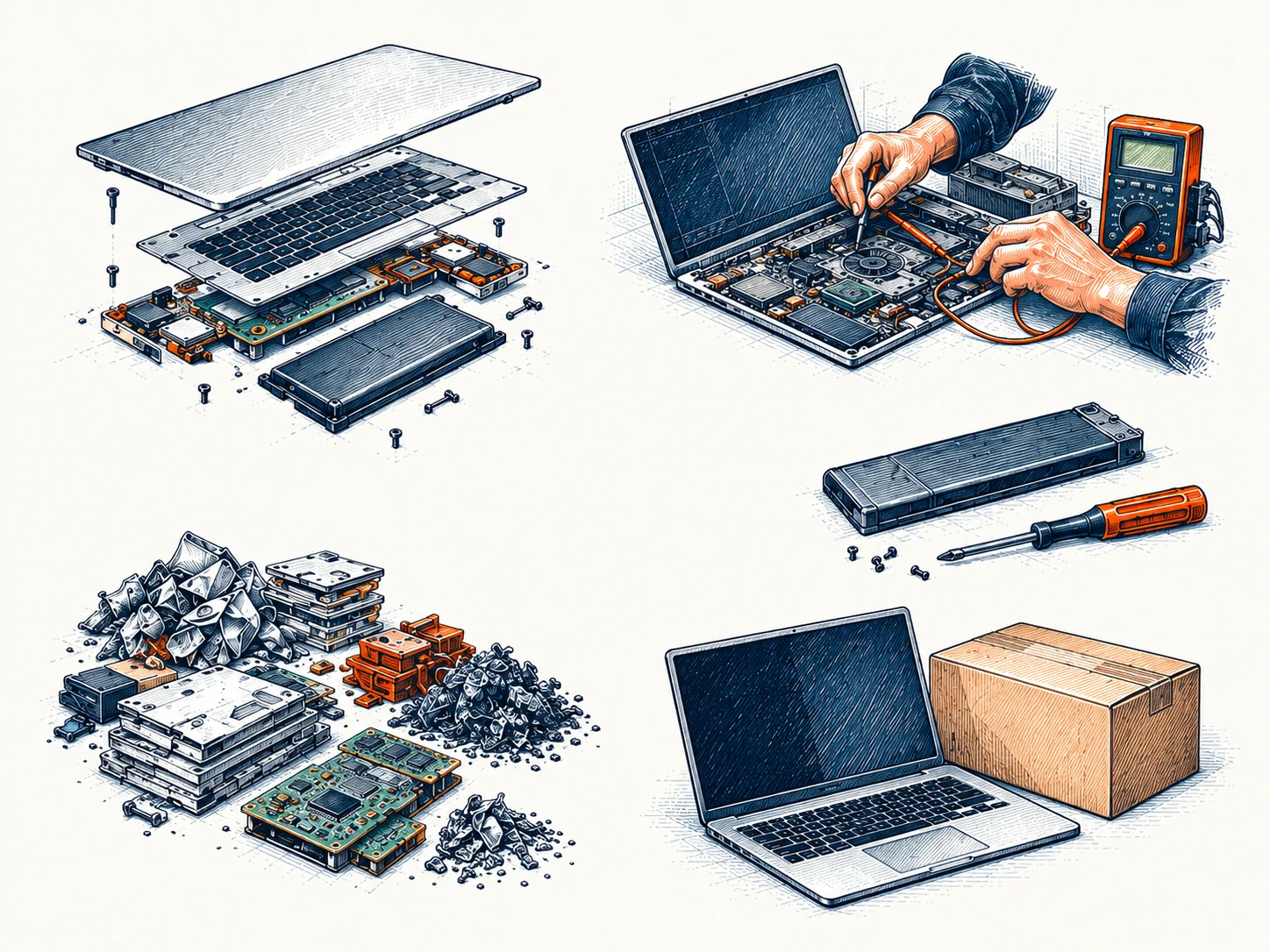
A laptop can remain physically intact while becoming inconvenient for its owner. A weak battery, a damaged port or changing software needs may prompt a replacement. Understanding the next step begins by separating those reasons.
Condition comes before the destination
A refurbishment business has to assess the whole machine and decide what it can responsibly offer. The screen, keyboard, battery, storage and software support each affect usefulness. A clean enclosure is not a substitute for a documented inspection.
Data handling is another responsibility. Before a device changes hands, the previous owner's information needs an appropriate removal process. A trustworthy service explains what it does and what assurance it can provide, rather than treating a cosmetic reset as an adequate answer.
Match the promise to the next user
The next customer buys a working tool, not an abstract quantity of recovered material. A clear condition description, stated limitations and a service route can make the offer understandable. Availability of suitable parts and supported software also matters to the machine's remaining usefulness.
Sometimes repair or resale is unsuitable, and responsible recycling becomes the relevant route. These choices should not be drawn as an inevitable closed loop. The illustration is a map of questions and possible destinations. The case for each depends on an actual device, a qualified assessment and a clear account of what happens next.
This original explanatory article demonstrates Loombrief's reading experience. It is not current reporting or investment advice. Publication dates, evidence and editorial review will accompany reported stories.
Read the edition note