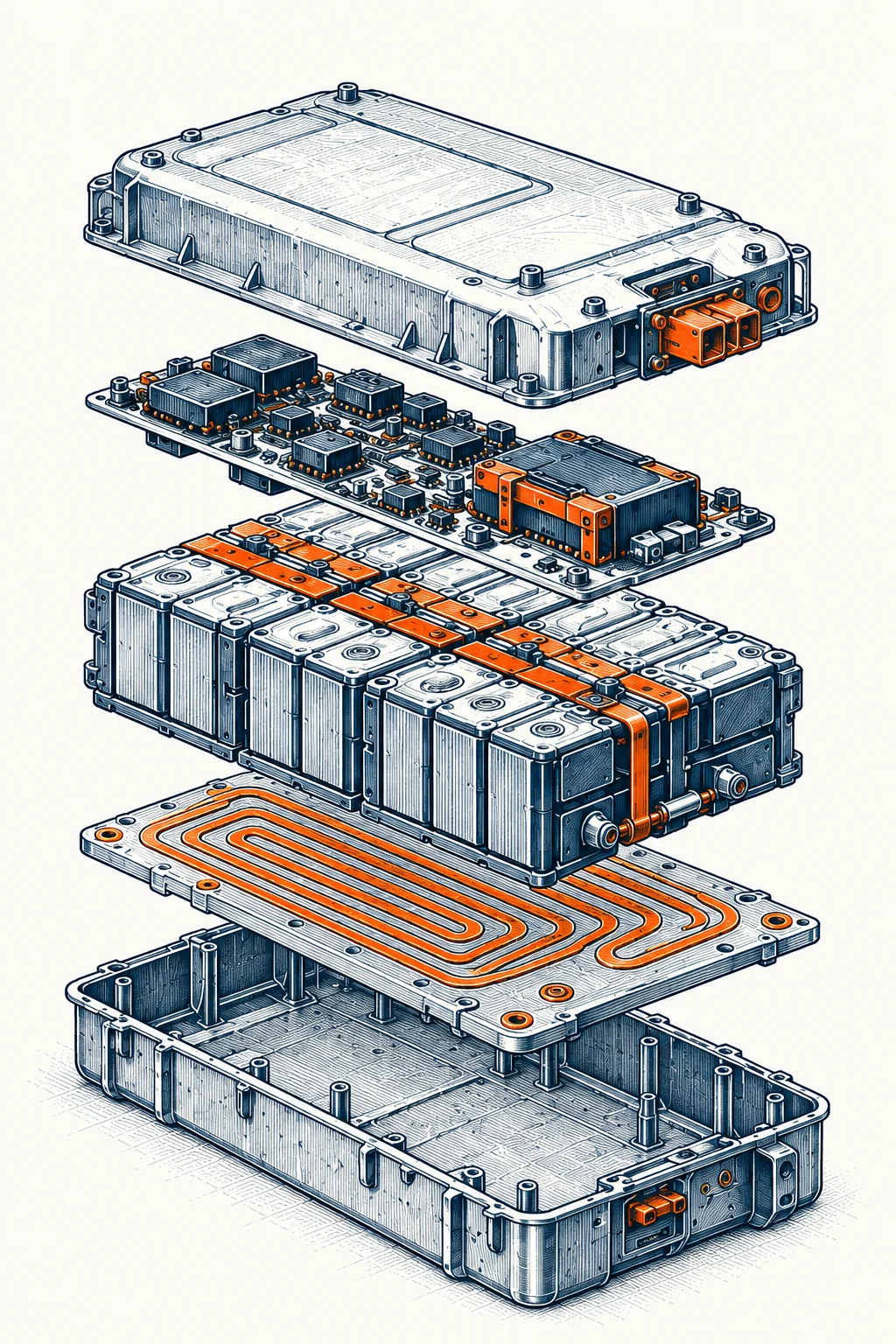
An exploded drawing makes a battery pack look like a collection of separate objects. In operation, those objects depend on one another. The illustration here is conceptual: actual pack structures differ, and the drawing is not a construction or repair guide.
More than a container for cells
Cells are part of a larger system that can include electrical connections, monitoring, temperature management and a protective enclosure. Decisions about these parts affect assembly, servicing and the way the pack fits its intended vehicle or equipment.
A design that saves space may create a different maintenance problem from a design that makes individual parts easier to reach. There is no universal winner. The appropriate choice depends on the application, its operating conditions and the approved service approach.
A drawing becomes a set of responsibilities
The business question is who owns the connections between components. When a problem appears in service, the customer needs a path from an observed symptom to diagnosis and an authorised remedy. That path can cross a cell supplier, pack maker, vehicle manufacturer and service organisation.
Warranty terms, diagnostic access and replacement arrangements make those responsibilities concrete. They also shape the cost of supporting a product after the original sale. A useful review therefore follows the pack through its working life, asking how faults are identified, who can act on the information and what keeps the customer's equipment available.
This original explanatory article demonstrates Loombrief's reading experience. It is not current reporting or investment advice. Publication dates, evidence and editorial review will accompany reported stories.
Read the edition note