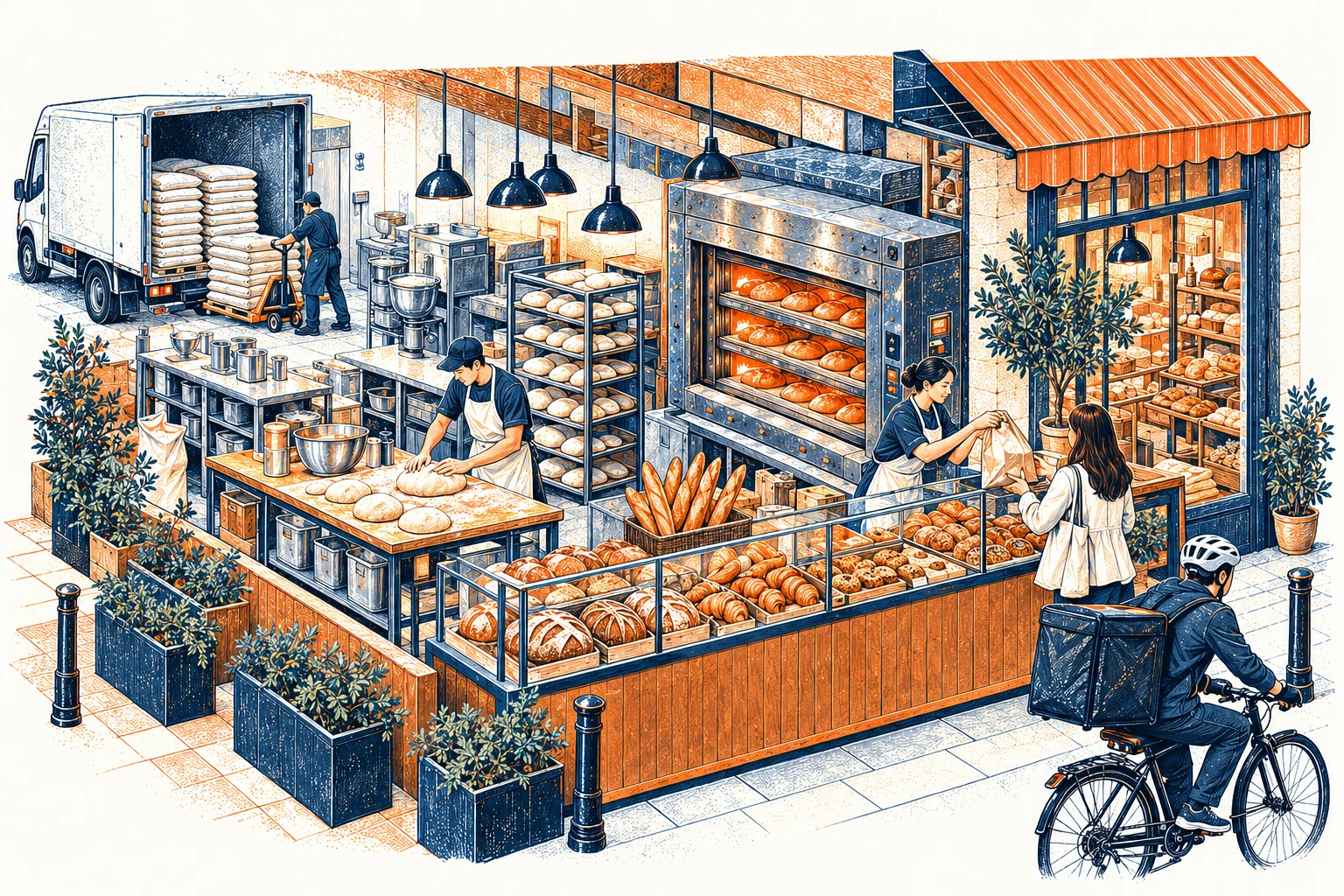
Picture a bakery before the front door opens. Ingredients arrive, dough rests, trays move and someone prepares the counter. The finished loaf is visible to the customer. The coordination behind it is the part an owner has to make repeatable.
Demand arrives at a particular hour
More sales are useful only if the bakery can prepare the right products when people want them. Making everything early may leave unsold stock. Waiting too long can leave a full oven behind an empty counter. The owner is balancing preparation time against uncertainty about the day.
The useful record is more specific than total daily revenue. What sold, when it sold and what remained can guide the next production plan. A busy morning does not automatically justify producing more of every item.
Find the step that holds the others back
If the team waits for oven space, another mixer may add little useful output. If packing takes too long, extra baking can move the queue to a different table. Observing an ordinary shift reveals where work accumulates and which decision might relieve it.
Growth also changes the owner's role. Methods that once lived in one person's hands need to become teachable without removing the judgement that makes the product good. Clear preparation notes, training and a manageable menu can help another person produce a consistent result. Expansion begins with understanding the existing morning.
This original explanatory article demonstrates Loombrief's reading experience. It is not current reporting or investment advice. Publication dates, evidence and editorial review will accompany reported stories.
Read the edition note